Welcome to Sequim & Port Angeles Real Estate, a Division of eXp Realty (The 1st Web 3.0 Virtual Office)
1 Feb
Buyers are using the Internet to search for their next home, and this technology is the greatest advancement for home buyers in decades, at least since the invention of the MLS itself. Online MLS search tools have made finding a home or land so much easier and more efficient, it’s really amazing. While buyers can browse hundreds of homes for sale with very specific parameters, there is still something the Internet won’t do for you.
The Internet won’t give you the 3D real life experience with the ability to see everything in person, experience the visual reality (as opposed to virtual reality), experience the smells and all that your senses tell you about a neighborhood and a house. Looking at a data sheet and some photos and maybe even a virtual tour is all good. It’s all incredible, and so much more than buyers had even a few years ago, but until you put boots on the ground, you won’t be able to get the full experience of any home or lot.
This becomes glaringly evident when you look at homes for sale in different cities and states. The real estate markets are different around the country. For example, if you live in an area like Phoenix or Mesa or Las Vegas, you can find some absolutely gorgeous foreclosure homes in the MLS, and some great prices that may be as much as 30% or more below their normal FMVs. In fact, you can find not just a few homes like this, but hundreds. There are foreclosures that are beautiful and listed at incredible prices, the kind of homes that buyers want and could say, “I could make this my home forever.”
But in an area such as Sequim, Washington (and many cities and towns around the country), you cannot find such nice homes readily available in the MLS at great prices. In fact, in some of these areas, it is almost impossible to find a foreclosure that is nice enough to live in, doesn’t need major work, and is priced very low.
Some of these differences can be interpreted by an online Internet search, but unless and until you actually put boots on the ground, you won’t really know precisely what these homes look like. Use the Internet to filter through available homes, and then plan your trip to view the best prospects. But don’t be surprised if everything looks different on the ground. It always does.
Possibly Related Posts:
14 Jan
More foreclosures are on the horizon just about everywhere in these United States. Retirement havens Sequim and Port Angeles are no exception, although we certainly have a much smaller foreclosure market than most. Our own foreclosure market is a function of the mortgage debacle and the recession. Owners who find they owe more than the house is worth are making hard decisions about whether to continue to make the mortgage payments or just walk away. But there’s another reason we will see more foreclosures. This national recession is taking a tremendous toll on family finances. Many are unemployed. The self-employed entrepreneurs, who are the backbone of this great nation, are getting hit hard, and this will mean more foreclosures. To make matters worse, national banks with mortgage loans on the Olympic Peninsula are quite uncooperative and generally unwilling to work with distressed homeowners when it comes to what are text book cases for loan modifications and short sales.
So we certainly will see more foreclosures in 2010. How will this effect the real estate market for buyers and sellers? Will this present grand opportunities for buyers? If you are a buyer, should you be scouring the market for that diamond in the rough, aka that foreclosure bargain?

Not all foreclosures are disasters like the one in this photo, but many foreclosures are in such disrepair, or have been damaged intentionally by the previous owners so much that they simply do not appeal to 98% of all buyers. Several of our local foreclosures have had fixtures torn out, sinks ripped out, kitchen islands taken, hot tub parts removed, and yards left looking like a natural disaster occurred.
Buyers tell me the first priority is location. What good is a great house if it is in a horrible location? With that in mind, foreclosures do not lend themselves to the first priority. A foreclosure cares not where it is located, what the neighborhood looks like, whether there is a mountain view, a water view, or no view at all. A foreclosure does not care if it is next to a junk yard or 200 feet from a major highway. You don’t get to pick the location of a foreclosure.
Foreclosures on the Olympic Peninsula are not like foreclosures in markets like Las Vegas or Phoenix, where there are so many that they have had to develop systems to organize how the banks will work with the REOs, the appraisers, new lenders, and the listing Realtors. By comparison, the foreclosure market here is in chaos, not order.
When foreclosures are listed in Las Vegas, they are listed at sellable prices, not excessively high listing prices. But this is not necessarily true in Sequim and Port Angeles. Many foreclosures here are listed at prices so high, you can find much better deals in the MLS that are not foreclosures or distress sales.
Of the very few needles in the foreclosure haystack that we do get, you can bet that the property either will not make it to the Trustee’s Sale before a full time investor has already purchased it, or it will be sold within two hours of listing. It is almost impossible to compete on that level. First, you can’t compete in the first instance, and in the second, there’s no way to know when a foreclosure will find its way back into the MLS. But there are some who are either on the inside (don’t get me started on that issue, because I do not have the evidence to reveal some of what I suspect may be going on in the foreclosure market behind the scenes), or they are just involved in a series of coincidences. As a buyer, you can’t count on being lucky with a foreclosure.
Conclusion. An increase in foreclosures in the Sequim and Port Angeles areas will not help buyers as most of them hope or think it could. The vast majority of buyers (98%) have no interest in the foreclosures that come across their radar. Of the few who are interested in pursuing the idea of buying a foreclosure, most of them will give up after great frustration and months of searching. For homeowners who have their homes listed for sale in the MLS with a Realtor at a reasonable price, the homes in foreclosure are not really competition. Those who would buy a foreclosure are almost never those who would buy a nice three bedroom, two bath home in a nice area here. Or perhaps that should be said the other way around. Those who are in the bell curve of buyers who want a nice three bedroom, two bath home with an attached garage in a nice area are not likely to find those parameters in a foreclosure. And those buyers who retire here and are serious about finding their prefect retirement home often cannot find it in the regular MLS listings. These buyers will purchase a lot in the perfect location with a mountain view or water view, and hire a custom home builder so they can live the rest of their days in a castle of their own design. (See Sequim Custom Home Builder)
Recommendation. I would urge you to narrow down precisely what it is you want and can afford, as well as your timeline. Then scour the market with your Realtor’s help and find the best home for you. Whether that is a FSBO, a regular MLS listing, a foreclosure listing, or building your own retirement home doesn’t matter. What matters is that you live in your dream home for the rest of your days in peace. In other words, don’t focus all your energy on finding a foreclosure. That can turn out to be a very frustrating failure. Instead, focus all your energy on finding that ideal home in the ideal location. That may or may not be a foreclosure, but with this strategy your probability of success just went up dramatically.
A great tool online for finding a home or land in the MLS, whether it is a foreclosure or not, is this online MLS search: Search the Sequim and Port Angeles Homes and Land Listings.
Possibly Related Posts:
11 Dec
Loan modifications under a federal plan announced by President Obama had hope for homeowners who were struggling to make their mortgage payments, and for those who were already in default and facing a foreclosure. Over 3,137,548 homeowners made requests for information, but only 31,382 actually got permanent loan modifications. Mortgage representatives around the country geared up to help homeowners save their homes and many implemented special educational programs to get the word out.

Unfortunately, it now appears that the program has been a dismal failure with only a one percent (1.0%) success rate. While one could be critical of the Obama program for the failure, the real victims are homeowners across America. The pace of foreclosures in several large metropolitan areas has not slowed down. For the government’s report, see Loan Modifications Report.
“So out of over 3 million requests sent to borrowers, only 31,382 modifications have been made permanent. That’s a failure of epic proportions. Imagine if you got a 1% score on a test when you were in school. How embarrassing. No wonder the link to this report is “accidentally” broken on the financial stability website. (I found it by guessing what they’d correctly name the file and typing it into the browser.)” Quoted from the Atlantic, 1% Success Rate.

There have been some successful loan modifications in Sequim and Port Angeles, although not necessarily under the federal program. Clallam County has seen its share of foreclosures gradually increasing. Trustee’s Sales at the Courthouse have stepped up, and projections are that there are many coming down the pipeline. We shall see, but if you are in need of a loan modification, pursue that diligently with a reputable loan rep. Many have gone down the path of modification with a rep that dragged them along for months with nothing in the end, and all that after paying a hefty fee.
Possibly Related Posts:
10 Dec
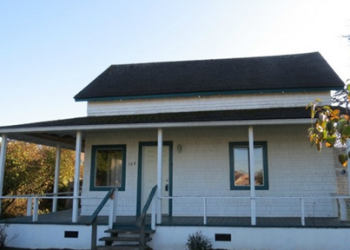
See this home by driving by at 83 Three Firs, Sequim, Washington. Then call me to see the inside, Chuck Marunde at 360-775-5424.
Possibly Related Posts:
8 Dec
Buying foreclosures in Sequim and Port Angeles is a challenge, and that is an understatement. Here’s a short video that describes why.
Chuck Marunde is a Qualified Foreclosure Buyer’s Agent and can be reached at chuckmarunde@gmail.com or at 360-775-5424.
Possibly Related Posts:
6 Dec
Buying foreclosures can be confusing and frustrating. The foreclosure process around the country is chaotic at best. This is the first of a two part video series describing the process from default to the Trustee’s Sale and beyond to listing and selling. We cut through all the nonsense, all the hype, money-making scams, and all the misinformation to get directly to the truth as it effects you, a potential buyer of a foreclosure home. This is Foreclosures Part 1 of 2. After viewing this video, watch Foreclosures Part 2.
Buyers and investors in the State of Washington may retain the services of Chuck Marunde to draft and submit offers on foreclosures. Chuck is a Broker and Realtor, practiced real estate law for 20 years, and handled many foreclosures from beginning to end. While Chuck prefers not to list foreclosures, he is a qualified Foreclosure Buyer’s Agent with extensive experience.
Possibly Related Posts:
6 Dec
The foreclosure process around the country is chaotic at best, and trying to buy a foreclosure can be a very frustrating experience for buyers. This two part video series completes a description of the process from default to the Trustee’s Sale and beyond. We cut through all the nonsense, all the hype, money-making scams, and all the misinformation to get directly to the truth as it effects you, a potential buyer of a foreclosure home. Foreclosures Part 1 should be viewed first. This is Foreclosures Part 2 of 2.
Buyers and investors in the State of Washington may retain the services of Chuck Marunde to draft and submit offers on foreclosures. Chuck is a Broker and Realtor, practiced real estate law for 20 years, and handled many foreclosures from beginning to end. While Chuck prefers not to list foreclosures, he is a qualified Foreclosure Buyer’s Agent with extensive experience.
Possibly Related Posts:
29 Nov
Searching for a foreclosure at a price you can’t pass up? I’m surprised at how many people are diligently searching for Sequim foreclosures and Port Angeles foreclosures. There are four main foreclosure databases online for consumers. They are more accurately called “foreclosure information sources,” but for simplicity, I’ll refer to them as “foreclosure data sources.” Here they are with my analysis as a real estate foreclosure attorney and now real estate broker and Realtor.
Clallam County Foreclosure Data Source No. 1:
Foreclosure.com
This is the largest database in the country for foreclosures. Unfortunately, in Clallam County it is not complete. I subscribed to this service for almost two years myself so I could provide a service to my clients, but as I learned and as my clients have discovered, this database is incomplete. They offer a free trial, but you have to register to get access, and that annoys me. But there’s a bigger problem. They do not have a contract with the Clallam County Auditor’s office to scrape the data from the county’s site. I spoke with one of the founders of Foreclosure.com on the phone, and he was certainly nice but said that they had to focus on larger metropolitan areas, and he had no idea when, if ever, Clallam County would be included in their database. Right now the foreclosures that show up on their site are pulled randomly and automatically with their software but it is quite unreliable. So if you are serious about searching for foreclosures that are actually for sale, I do not recommend this site.
Clallam County Foreclosure Data Source No. 2:
RealtyTrac.com
I also tried subscribing to RealtyTrac.com for about a year, but I could repeat what I just wrote about Foreclosure.com. I do not recommend this site for the serious buyer or investor. There are foreclosure homes that show up for Clallam County, but again no one is actually entering these, and they do not have a contract to collect the information from the Auditor’s office, so this data is randomly pulled from various Internet sources, and many of these listings are not, I repeat not, for sale.
Clallam County Foreclosure Data Source No. 3:
USA-Foreclosure.com
(Northwest Trustee Services source)
Northwest Trustee Services certainly has a closer connection than the first two, and they hire our local appointed Trustee at the Friday morning sales. They do the paperwork on many foreclosures and adminster the sales. It appears they list their data with USA-Foreclosure.com. This site includes only the foreclosures they are adminstering. They also do not collect data from the County on all the foreclosures. This is a good source for foreclosures as long as you realize it is not the full database.
Clallam County Foreclosure Data Source No. 4:
Clallam County Auditor
(the original or source database)
Finally, we arrive at the original source of foreclosure data, the Clallam County Auditor’s office. This is where all real estate documents must be filed, including the Notice of Trustee’s Sale, which shows the balance owed, by whom, the scheduled date of the Trustee’s Sale, and the Trustee or Attorney handling the foreclosure. If you want reliable data, this is the place to go, and this includes every Foreclosure in Clallam County. The challenge is that this is a database of real estate records that is not designed for real estate investors or buyers. That means the searchable fields are not at all convenient for searching. You’ll have to spend hours every week to sift through thousands of real estate recordings to find a diamond in the rough. But let me save you a lot of time: You can filter your search by searching only the Notice of Trustee Sales. The results are still clumsy, but that does narrow it down a lot.
Finding a Sequim foreclosure or a Port Angeles foreclosure that is a good deal will be very hard, and when you find one, you can bet that many others have found it to, including some cash strong investors who know how to do their due diligence. There are some who work at this 40 hours a week. Do you have 40 hours a week to filter through 1,000 foreclosures to find one that you would be willing to buy so you can complete with other bidders? Now if we were in Las Vegas or Phoenix or Miami, this would be a totally different scenario, but in Sequim and Port Angeles, you can see why hunting for foreclosures is such a challenge.
I’ve handled many foreclosures as a real estate attorney, and as a Realtor I’ve represented clients buying foreclosures. If you want me to represent you, I’d be glad to. I don’t have the 40 hours a week to search for the steal of the century, but if you get lucky and find one, I can guarantee I know how to buy it. Some fees are negotiate, and others are not. You can email chuckmarunde@gmail.com or call 360-775-5424 anytime.
Possibly Related Posts:
12 Nov
Should I stop making payments and let the bank foreclose? This is a question that a lot of people are asking as they struggle financially to pay their bills and make their mortgage payment. In some cases a spouse has lost her job, and the income no longer supports a large mortgage payment. There are a thousand stories across the country explaining why good, hard working Americans cannot make their mortgage payments.
So the question comes up, “Should I stop making the mortgage payment?” Here is some practical advice intended to help you make wise decisions as well as protect your number one responsibility–your family.
Let’s break this into two common scenarios. The first involves a family that finds the current fair market value (FMV) of their home to be substantially less than their mortgage balance. In other words, they are upside down. The second situation involves a family with a mortgage balance equal to the FMV of their home, or less, but because of a loss of income, they realize that in the months ahead they will not be able to continue to make the payments.
First, for the family that is upside down on their mortgage but can afford to make the mortgage payments, it is both a financial and moral issue. You’ll have to address the moral issue consistent with your own values and beliefs. On the financial issue, it may make more sense to let the house go into foreclosure than make payments for the next 20+ years on a $400,000 mortgage balance. You may end up paying a total of $700,000 (principal plus interest) over that time period, but right now you may be looking at a house with a current FMV of only $275,000.
It might be easy for someone not in that situation to be critical and say the payments should be made. But one has to consider the long term picture, the challenges of growing older with the increasing cost of living and the growing burden of health care costs. The first rule of life is survival, and if survival means you must let a house go into foreclosure, then it is a tough decision that you will have to live with. Millions of Americans have found themselves forced to make such tough decisions this past year.
Second, for the family that realizes they will run out of money to pay the mortgage in six months, it makes no sense to continue to throw precious money into the dark hole. If you know you will run out of money, and if there is no apparent pot of gold at the end of your rainbow, then giving a corporate institution on the east coast precious money you will need to survive in six months makes no sense at all. You must place your family’s survival at the top of your priority list. The banks, who have their own ethical and financial problems, must fend for themselves. When it comes to balancing the welfare of your bank or your family, it is no contest. Your family wins, and you are ethically, morally, spiritually, and financially justified in no longer making the mortgage payments. And you should not throw good money after bad, meaning you should not pay property taxes either, or put money into the house for any other reason. Of course, if you have the money and income, you should make the payments, but we are discussing a family that does not have that option. Put in its proper perspective, it is not such a difficult moral decision. Uncomfortable? Yes, but necessary.
If you must, let the bank foreclose, but take care of your family and your needs as you grow older.
If you need to consider selling your home, because you are in default right now or will be soon, email me or call me to discuss your options. As a Realtor and retired real estate attorney, I would be glad to share whatever I know with you.
Possibly Related Posts:
28 Oct
Is a Deed in Lieu of Foreclosure a good idea? With our home in foreclosure or about to go into foreclosure, should we offer our bank a Deed in Lieu of Foreclosure? We also owe a second mortgage. This is a question that I get asked a lot lately, more than in all the years before.
The Deed in Lieu of foreclosure has several almost insurmountable obstacles. The explanation is a bit involved and much more complex than this simple explanation, but here are some highlights.
The Deed in Lieu is rarely accepted by a bank. There are a number of complex legal and insurance issues for banks if they take a Deed in Lieu. If a bank forecloses and they suffer a loss, they complete an application for loss with their mortgage insurance carrier, which is often HUD or some other insurer. Banks almost never suffer a financial loss, because they get reimbursed for any loss as the result of a foreclosure. (This is not true if the bank is local and keeps the loan in its local portfolio, but that is very rare. Almost all bank loans are sold.) But as I learned when I worked for Metropolitan Mortgage & Securities Company many years ago, if a bank accepts a Deed in Lieu, the same application and rules for reimbursement no longer apply, and it is much harder to prove that the bank would have sustained the same or greater loss if they had actually completed a foreclosure. So rather than go down that risky path, banks most often choose to foreclose, and that way they know they ultimately will get all their money. Nowhere in their calculations is there any consideration for you as the homeowner. They make their decisions based exclusively on their income and expense sheet.
If a bank in first position agreed to accept a Deed in Lieu, the property would still be subject to the second mortgage, and the bank in first would owe the entire balance to the second bank. That’s another reason the bank in first will prefer to foreclose. By foreclosing on the first mortgage, the second mortgage is wiped off the title.
There is another very difficult and unanswered question for you as a homeowner. Even if the bank agreed to take a Deed in Lieu, the IRS has regulations which could hit you with a tax based on the forgiven balance of the loan. I don’t know the precise math, but it has been argued that the IRS could consider the forgiven balance of the mortgage income in that same year, and the taxes could be horrendous. There was discussion in this past year about the possibility of the politicians passing temporary laws that would toll those IRS regs and give people relief, but I haven’t found anyone who knows for sure how any of this has worked out in the real world. Even accountants seem confused on these issues as to what should or could happen.
One last difficult issue is if the bank in first accepts a Deed in Lieu, they could still come after you for the loss in a civil suit, unless they agreed to sign a contract with you that they would not. But why would a bank who holds all the cards ever agree to not come after you for any loss they sustain. Remember, if they accept the Deed in Lieu, they suddenly owe the entire balance of the second. The second only goes away as security on the real estate if the first forecloses and the second mortgage decides not to protect their interest by paying off the first.
By the way, if the first bank accepts a Deed in Lieu, there is no foreclosure and therefore no Trustee’s Sale. The bank in first would literally own the property as though they were stepping into your shoes, so they would have to list it for sale, but they still owe the second, so it is a losing situation for them.
The practical course of action will be that the bank in first forecloses on the property. They will feel they have no choice when their legal department and their loss and mitigation department flush out all the issues, just like I did here. When they understand all this, they will simply move forward with the foreclosure. The unanswered question is whether the bank in second will try to protect it’s interest by either making the payments on the first, which they could do, or pay off the first entirely and then foreclose themselves. It is extremely rare that a bank in second protects its interest in this way. They usually get foreclosed on and go lick their wounds, possibly threatening to sue you for their loss.
A Deed in Lieu of Foreclosure is not likely to happen with a bank. They prefer to foreclose.
Possibly Related Posts:
Recent Comments